Veterinary clinics may repeatedly receive questions about opening hours, appointments, available services, location, payment methods, and current promotions.
I built a portfolio-based Telegram FAQ assistant that connects incoming messages with the Gemini API through Make.com while applying clear scope and safety boundaries.
Operational problem
Inventing clinic information
Answering outside the intended purpose
Giving unsafe medical suggestions
Presenting uncertain information as fact
Failing to direct urgent concerns appropriately
System built
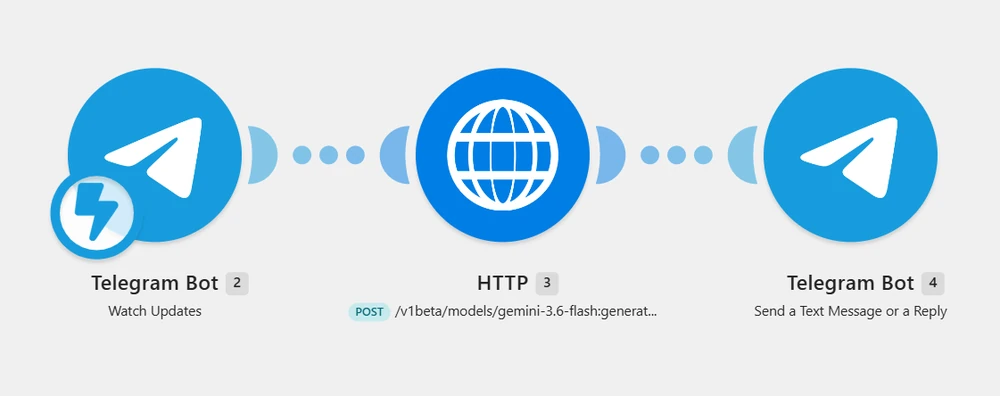
Make.com captures the Telegram message and sends it to Gemini together with approved clinic information and system instructions. The assistant answers routine administrative questions, uses fallback language when information is missing, and redirects medical or emergency concerns to professionals.
Workflow diagram
01Telegram Question
02Make.com Captures Message
03Clinic Information + Guardrails Added
04Request Sent to Gemini API
05Scope Check
06Telegram Reply Sent
Approved Clinic FAQ → FAQ Answer Generated
Unknown Info → Contact Clinic
Medical or Urgent Concern → No Diagnosis + Professional Referral
Tools and technical capabilities
Automated clinic FAQ responses
Approved-information-only instruction
Missing-information fallback
No diagnosis or medication recommendations
Emergency redirection
Structured AI response mapping
Actual project evidence
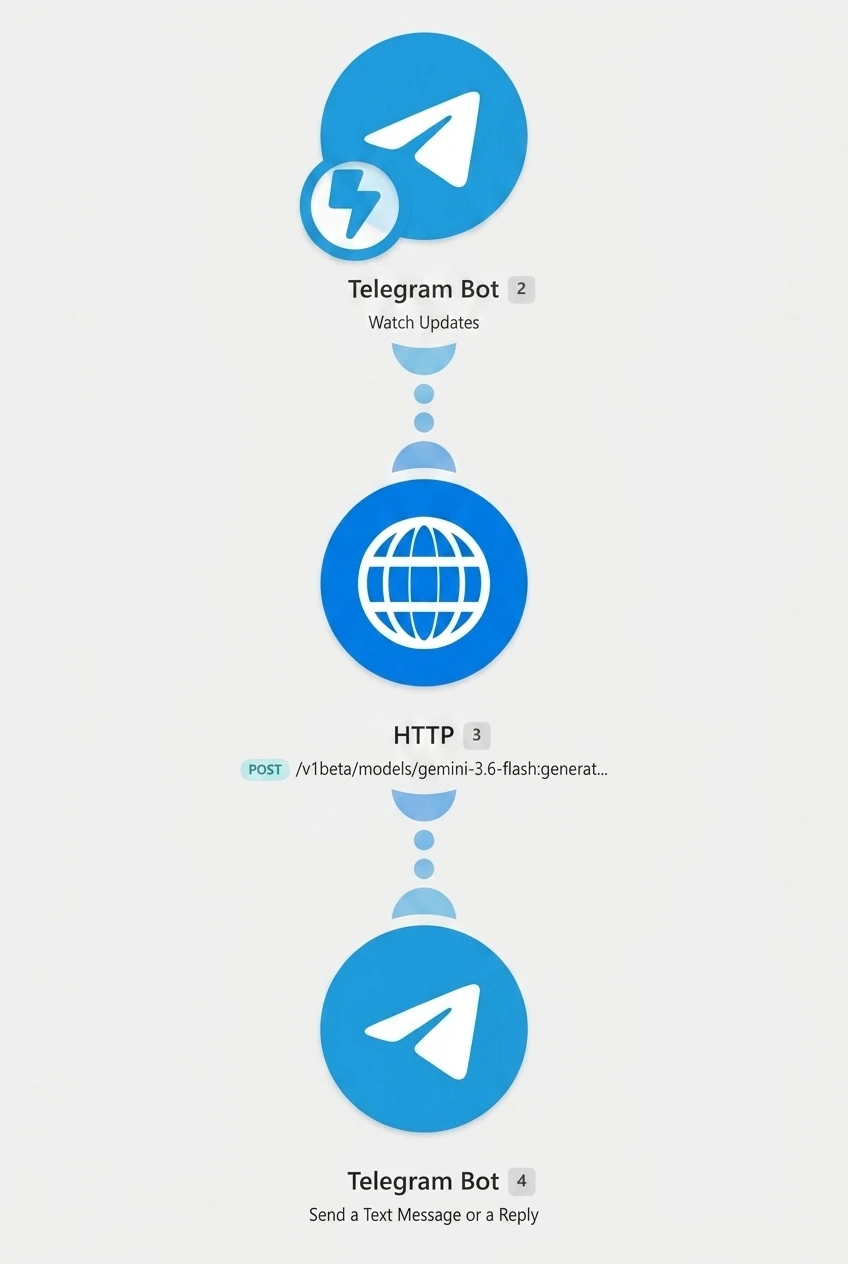
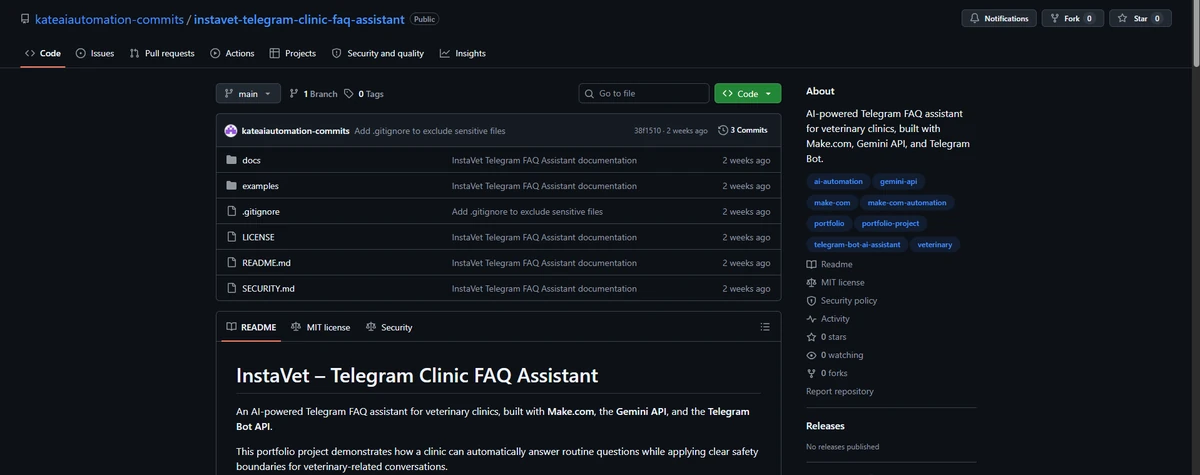
Routine FAQ Support and Safety TestsShows approved FAQ answers, missing-information fallback, and medical safety guardrails.Connected AI WorkflowShows Telegram, HTTP request to Gemini, and Telegram reply modules.Documented Project BuildShows the public repository for the assistant documentation.
Safety boundary
The assistant handles routine administrative questions only. It does not diagnose conditions, recommend medication, or replace licensed veterinary professionals.
Key learning or next improvement
The key learning is that AI assistants need clear scope boundaries, fallback behavior, and professional escalation rules before they can be trusted in sensitive service contexts.
Have a similar workflow bottleneck?
I can help map the repetitive steps and identify where practical automation could make the process easier.