An automated intake workflow designed to collect uploaded document images, organize them in cloud storage, and maintain a structured submission record.
Service businesses may receive photos of forms, identification documents, records, receipts, or supporting files through messaging platforms.
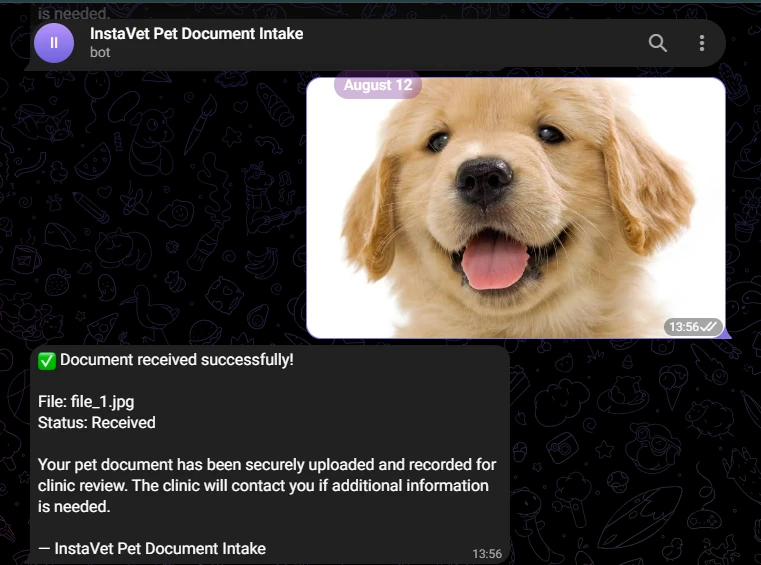
I built a Telegram-based portfolio prototype that downloads the uploaded file, stores it in Google Drive, records the submission in Google Sheets, and sends a confirmation reply.
Operational problem
Opening each message individually
Finding the correct uploaded image
Downloading files manually
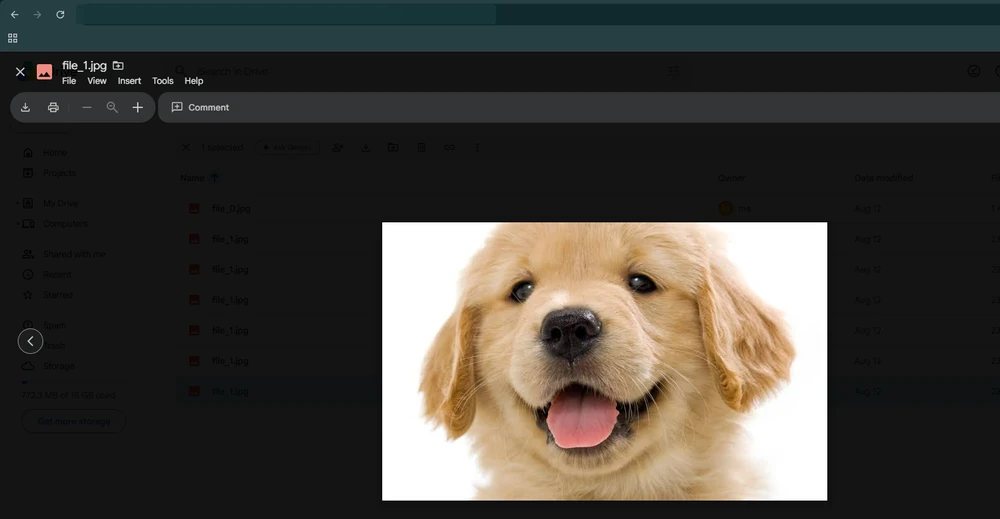
Moving files into cloud storage
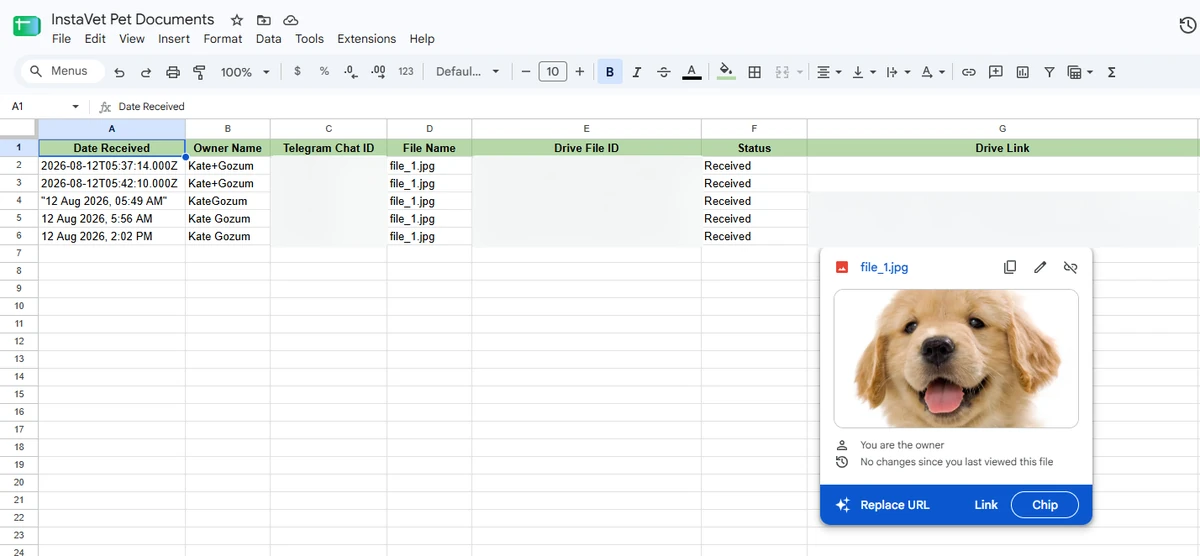
Recording sender and submission dates
Confirming the document was properly saved
System built
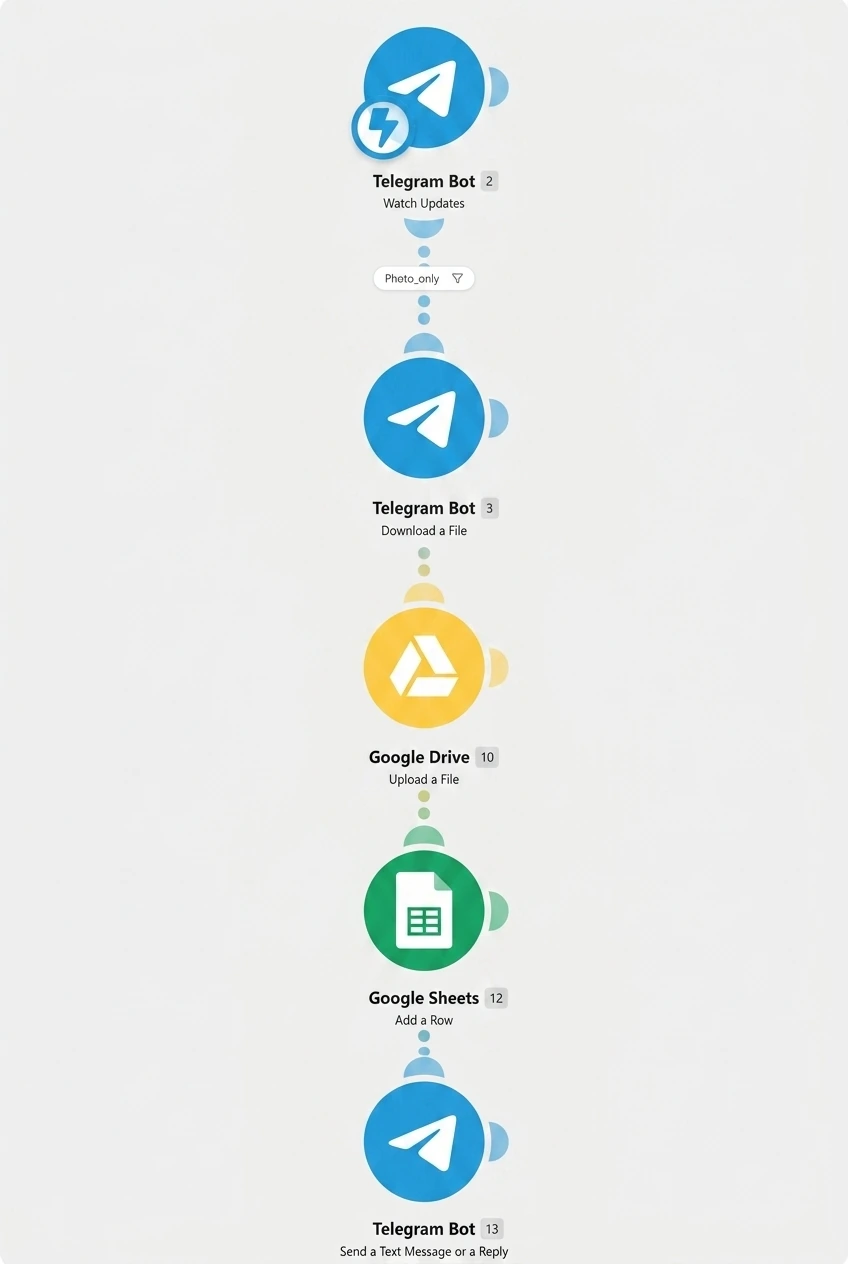
Telegram may provide multiple sizes of the same uploaded photo. The workflow retrieves the needed file ID from the photo array, downloads the selected file, uploads it to Google Drive, logs the submission, and replies to the user.
Workflow diagram
01Telegram Upload
02File Download
03Google Drive Storage
04Google Sheets Record
05Telegram Confirmation
Tools and technical capabilities
Messaging-based file intake
Automatic file downloading
Google Drive storage
Document submission logs
File links and status tracking
Automatic receipt confirmations
Actual project evidence
Telegram ConfirmationShows a submitted image and confirmation message from the Telegram bot.Connected Intake WorkflowShows Telegram, Google Drive, Google Sheets, and reply modules.Traceable Submission RecordLogs sender, submission date, file name, status, and Drive link.Cloud StorageShows the uploaded file stored outside the chat conversation.
Current scope
The current prototype processes Telegram image uploads. A production version could add PDFs, standardized filenames, duplicate checks, access permissions, and retention rules.
Key learning or next improvement
The strongest learning was handling file metadata carefully so the uploaded document can be stored and traced without staying buried inside a chat thread.
Have a similar workflow bottleneck?
I can help map the repetitive steps and identify where practical automation could make the process easier.