Veterinary clinic staff may need to manually review form submissions, identify requests that require faster attention, transfer patient information into a record, and notify the appropriate team member.
I built a portfolio-based automation prototype that connects these steps into one organized workflow. It collects submitted information, uses AI-assisted classification to help identify priority, routes the request, sends a formatted staff notification, and records the details for review.
Operational problem
Checking every submission individually
Identifying which requests may need faster attention
Copying client and patient information between tools
Preparing internal notification emails
Maintaining an organized record of inquiries
System built
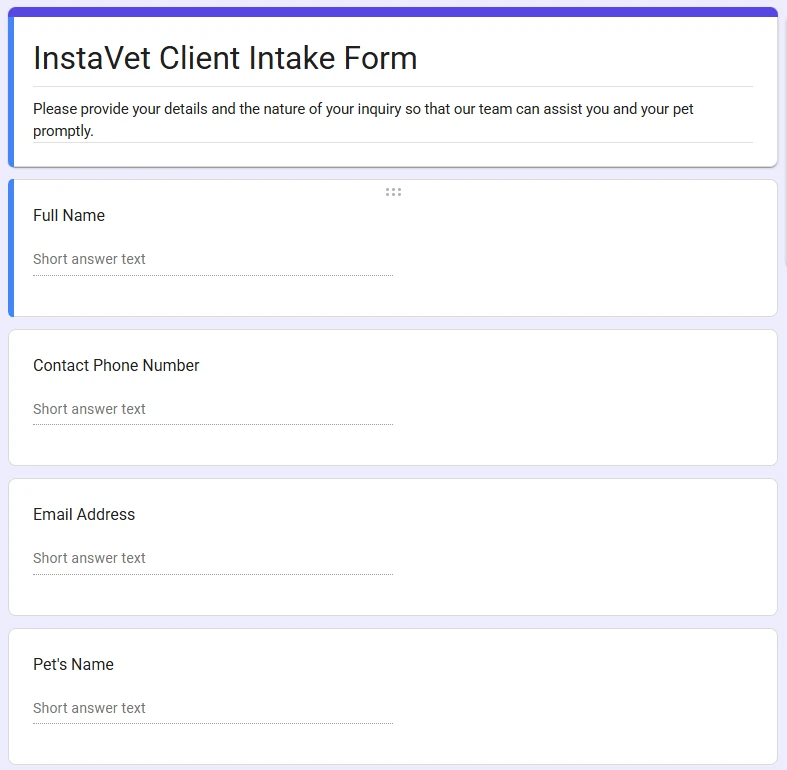
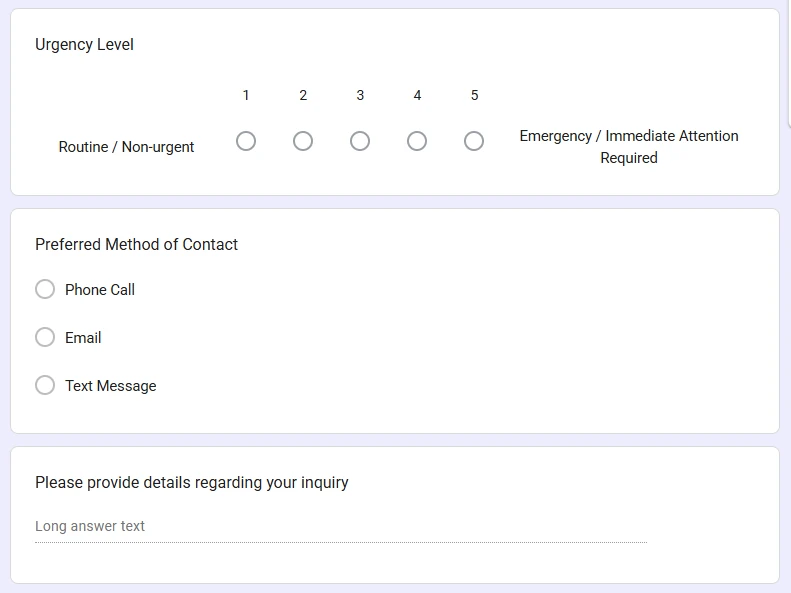
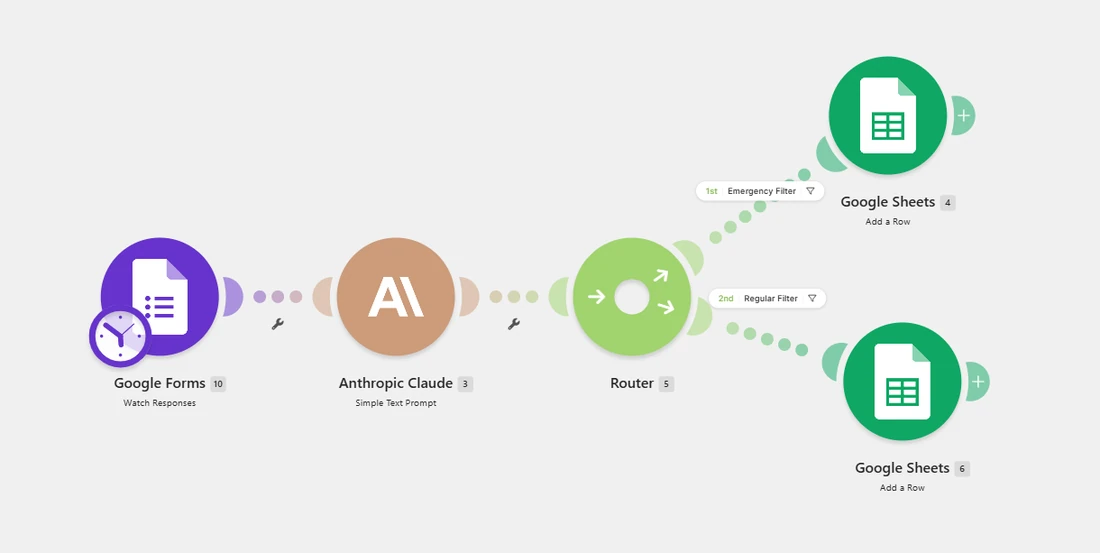
The workflow begins when a pet owner completes a structured intake form. Make.com receives the submission, sends relevant inquiry information to Claude AI for administrative classification, then routes the request to a potentially urgent path or a regular review path.
Workflow diagram
01Pet Owner Intake Form
02Make.com Captures Submission
03AI-Assisted Request Classification
04Priority Router
05Formatted Notification + Patient Record Log
Potentially Urgent → Highlighted Staff Alert
Regular → Standard Review Queue
Tools and technical capabilities
Structured intake data collection
AI-assisted request organization
Conditional priority routing
Formatted internal notifications
Centralized submission logging
Human review maintained throughout the process
Actual project evidence
Structured IntakeCaptures client contact details and patient information before the workflow starts.Inquiry DetailsCollects urgency level, preferred contact method, and inquiry notes.Connected Routing WorkflowShows the form trigger, AI classification, router, and record logging paths.
Safety note
AI supports administrative routing only. It does not provide diagnoses, recommend treatment, or replace veterinary staff review.
Key learning or next improvement
The strongest part of this build is keeping the AI layer administrative. A practical next improvement would be adding clinic-approved priority rules and exception handling before any production use.
Have a similar workflow bottleneck?
I can help map the repetitive steps and identify where practical automation could make the process easier.